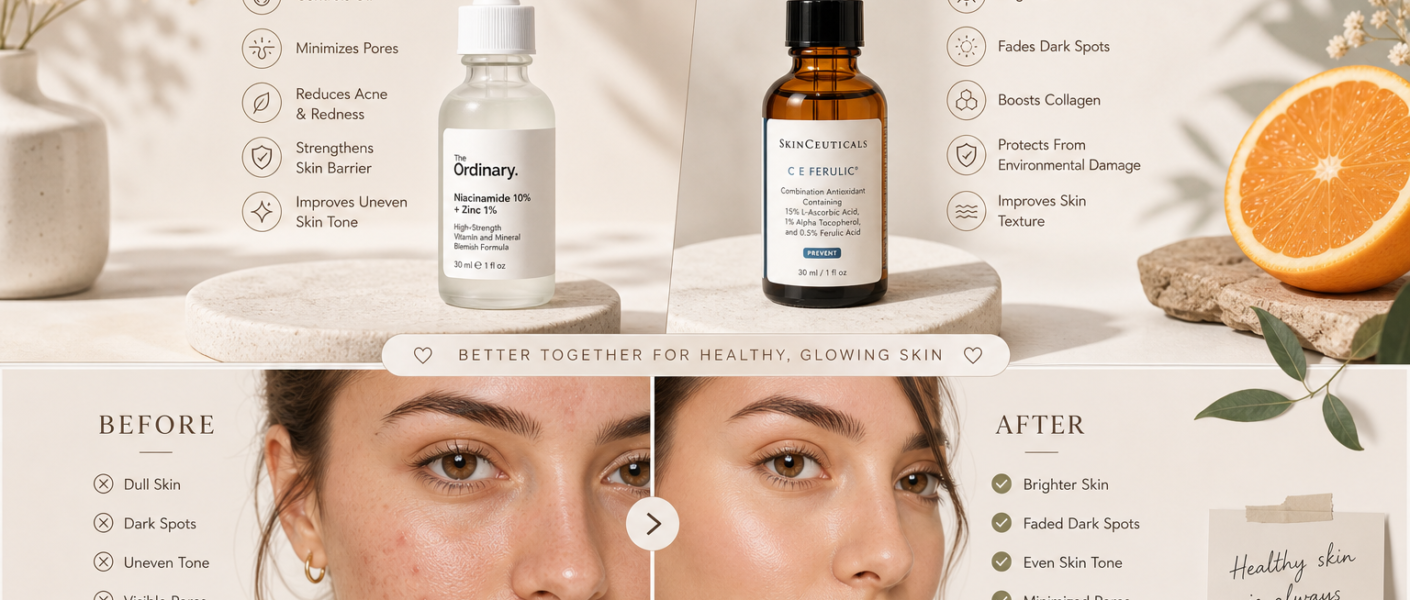
Niacinamide vs Vitamin C – Which Skincare Ingredient Should You Choose?
The skincare world is full of powerful ingredients, but two of the most talked-about are Niacinamide and Vitamin C. Beauty experts, dermatologists, and skincare lovers constantly debate which ingredient works better for glowing, healthy skin.
Both ingredients are extremely popular because they target multiple skin concerns like dullness, acne, dark spots, uneven skin tone, and aging. However, many people are confused about which one they should add to their skincare routine.
Should you choose Niacinamide or Vitamin C?
Can you use them together?
Which one is better for your skin type?
In this complete guide, we will compare Niacinamide and Vitamin C, explain their benefits, and help you decide which ingredient is best for your skin.
What Is Niacinamide?
Niacinamide is a form of Vitamin B3, an essential nutrient that helps improve skin health. It is one of the most versatile skincare ingredients and works well for almost all skin types, including sensitive and acne-prone skin.
Niacinamide is known for strengthening the skin barrier, reducing inflammation, and controlling excess oil production.
H3: Benefits of Niacinamide for Skin
Niacinamide offers several benefits that make it a must-have ingredient in many skincare products.
1. Controls Excess Oil
Niacinamide helps regulate sebum production, which makes it perfect for oily and acne-prone skin.
2. Reduces Acne and Breakouts
Because of its anti-inflammatory properties, Niacinamide can calm redness and help reduce acne.
3. Minimizes Pores
Niacinamide can visibly reduce the appearance of large pores by improving skin elasticity.
4. Strengthens the Skin Barrier
It boosts ceramide production, which helps keep the skin hydrated and protected from environmental damage.
5. Improves Uneven Skin Tone
Niacinamide can reduce pigmentation and improve overall skin texture.
What Is Vitamin C?
Vitamin C is one of the most powerful antioxidants used in skincare. It helps protect the skin from environmental damage, pollution, and UV stress.
Vitamin C is widely known for its ability to brighten the skin and reduce dark spots, making it a favorite ingredient in glow-boosting skincare routines.
Benefits of Vitamin C for Skin
Vitamin C is famous for delivering visible results when used consistently.
1. Brightens the Skin
Vitamin C helps fade dullness and gives the skin a natural radiant glow.
2. Reduces Dark Spots and Pigmentation
It inhibits melanin production, which helps reduce hyperpigmentation and sun spots.
3. Boosts Collagen Production
Collagen is essential for maintaining firm, youthful skin. Vitamin C helps stimulate collagen, reducing fine lines and wrinkles.
4. Protects Against Environmental Damage
Vitamin C acts as an antioxidant that protects the skin from pollution and free radicals.
5. Improves Skin Texture
Regular use can make the skin smoother and healthier.
Niacinamide vs Vitamin C – Key Differences
Although both ingredients improve skin health, they work in different ways.
| Feature | Niacinamide | Vitamin C |
| Main Benefit | Oil control and barrier repair | Brightening and antioxidant protection |
| Best For | Acne, oily skin, redness | Dull skin, dark spots, aging |
| Skin Type | All skin types | Normal to dry skin |
| Sensitivity Risk | Very low | Can irritate sensitive skin |
| Time to See Results | 4–6 weeks | 4–8 weeks |
Niacinamide focuses more on balancing and calming the skin, while Vitamin C focuses on brightening and protecting the skin from damage.
Which Ingredient Is Better for Your Skin Type?
Choosing between Niacinamide and Vitamin C depends largely on your skin type and skincare goals.
For Oily and Acne-Prone Skin
Niacinamide is usually the better option because it controls oil production and reduces breakouts.
For Dull Skin
Vitamin C works best for brightening dull and tired skin.
For Dark Spots and Hyperpigmentation
Vitamin C is more effective at reducing dark spots and uneven skin tone.
For Sensitive Skin
Niacinamide is gentler and less likely to cause irritation.
For Anti-Aging
Vitamin C is excellent for reducing fine lines because it boosts collagen production.
Can You Use Niacinamide and Vitamin C Together?
Yes, you can use both ingredients in the same skincare routine.
In the past, people believed that Niacinamide and Vitamin C should not be used together, but modern skincare research has proven that they are safe to combine.
In fact, using them together can provide even better results.
Benefits of Using Both Together
Using both ingredients can help:
- Brighten the skin
- Reduce dark spots
- Control oil production
- Strengthen the skin barrier
- Protect against environmental damage
How to Layer Them
You can include both ingredients in your skincare routine with the following steps:
Morning Routine
- Cleanser
- Vitamin C serum
- Niacinamide serum
- Moisturizer
- Sunscreen
Night Routine
- Cleanser
- Niacinamide serum
- Moisturizer
Vitamin C is usually best used in the morning because it protects the skin from environmen
Common Mistakes When Using These Ingredients
Even powerful ingredients can cause problems if used incorrectly. Using Too Many Actives
Avoid mixing too many strong ingredients like retinol, acids, and Vitamin C all at once.
Not Using Sunscreen
Vitamin C works best when combined with sunscreen. Without sunscreen, pigmentation can worsen.
Using High Concentrations Too Quickly
Start with lower concentrations:
- Niacinamide: 5%–10%
- Vitamin C: 10%–20%
Gradually increase if your skin tolerates it.
Best Skincare Products with Niacinamide and Vitamin C
If you want to add these ingredients to your routine, look for serums with stable formulations.
Popular Niacinamide Products
- The Ordinary Niacinamide 10% + Zinc
- Paula’s Choice 10% Niacinamide Booster
- Minimalist 10% Niacinamide Serum
Popular Vitamin C Products
- SkinCeuticals C E Ferulic Serum
- La Roche-Posay Vitamin C10 Serum
- Minimalist 16% Vitamin C Serum
Always patch test before using new skincare products.
Final Verdict – Niacinamide vs Vitamin C
Both Niacinamide and Vitamin C are powerful skincare ingredients, and the best choice depends on your skin concerns.
Choose Niacinamide if you want:
- Oil control
- Fewer breakouts
- Smaller pores
- Stronger skin barrier
Choose Vitamin C if you want:
- Brighter skin
- Reduced dark spots
- Anti-aging benefits
- Protection against pollution
However, you do not necessarily have to choose between them. Using both ingredients together can create a well-balanced skincare routine that improves skin health and delivers glowing results.